Key Takeaways
- Salt air and high humidity along Rhode Island's coastline corrode standard light clips, sockets, and wiring — marine-grade and UV-resistant hardware is essential for waterfront properties in Narragansett, Newport, and Westerly.
- Nor'easters and sustained ocean winds can dislodge roofline lights secured with standard clips — heavy-duty fastening systems rated for high-wind exposure should be selected during summer planning appointments.
- Repeated freeze-thaw cycles in Rhode Island's late fall crack inferior light sockets — sealed-base LED C9 bulbs dramatically outperform incandescent options in these conditions.
- A June site survey allows professionals to assess salt deposit buildup on gutters and rooflines and identify vulnerable electrical junction points before any hardware is attached.
- Properties within one mile of Narragansett Bay or the Atlantic coastline should specify corrosion-resistant stainless steel or coated aluminum clips to prevent mid-season failures.
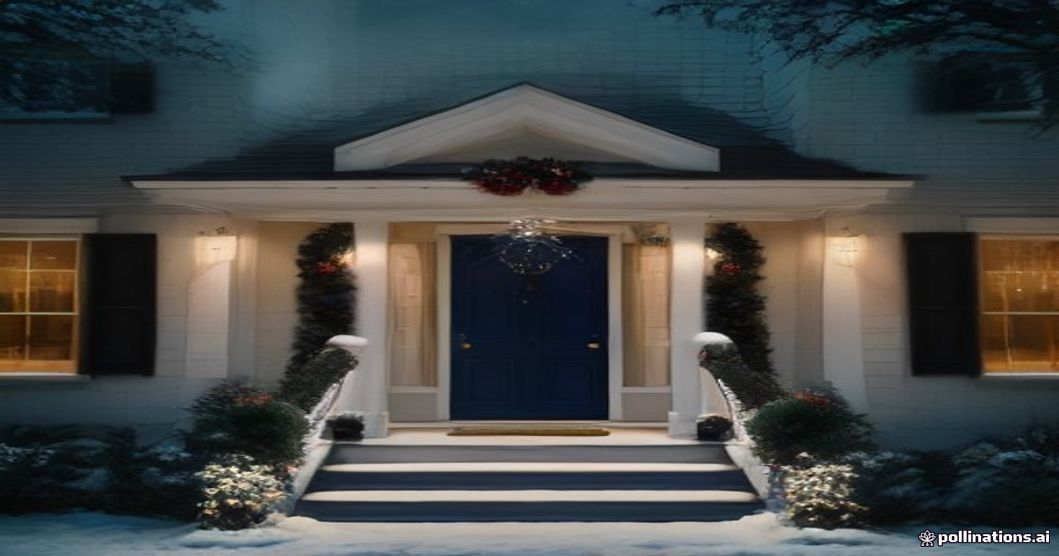
Picture a beautifully lit colonial in Narragansett — warm white C9 bulbs tracing every roofline, garlands glowing on the porch railings, and the whole scene reflected in the salt pond across the road. Now picture it in January after a Nor'easter: clips pried loose by 60-mph gusts, sockets cracked from three freeze-thaw cycles in a single week, corroded wiring from months of coastal fog. The difference between those two outcomes isn't luck — it's planning, and it starts in June. Rhode Island's coastal weather is among the most demanding environments for outdoor electrical installations on the entire East Coast, and the homeowners and business owners who understand that reality are the ones who enjoy flawless holiday displays year after year.
Why Rhode Island's Coastal Climate Is a Unique Challenge for Holiday Lighting
Rhode Island's geography — 400 miles of tidal shoreline, Narragansett Bay cutting deep into the state's interior, and open Atlantic exposure from Newport to Westerly — creates a microclimate that punishes standard holiday lighting hardware faster than almost anywhere else in New England. Salt air doesn't just corrode metal over years; it accelerates oxidation dramatically, and a single winter season can leave standard zinc-alloy light clips brittle and pitted. Coastal fog, which blankets much of Washington County and the East Bay dozens of nights per year, drives moisture directly into electrical connections that might otherwise stay dry in an inland setting.
Understanding these environmental stressors isn't alarmist — it's the foundation of smart installation planning. When you book a site survey in June, a professional installer arrives with this context already built into their assessment. They're not just measuring rooflines; they're evaluating salt deposit patterns on your gutters, checking the integrity of fascia boards that clips will anchor into, and noting which faces of your home receive the most ocean wind exposure. That granular knowledge is impossible to gather in November when everyone is scrambling.
Salt Air, Corrosion, and the Case for Marine-Grade Hardware
Marine-grade hardware is the non-negotiable baseline for any holiday light installation within one mile of Narragansett Bay or the Atlantic coastline. Standard light clips sold at big-box retailers are typically made from stamped steel or basic zinc alloy — materials that perform adequately in inland locations but begin corroding within weeks of salt air exposure. By mid-January, those clips can lose structural integrity, releasing lights that were perfectly secure in late November.
What Makes Hardware Truly Marine-Grade
- Stainless steel or coated aluminum clips: Grade 304 or 316 stainless steel resists chloride-induced corrosion; powder-coated aluminum offers a lightweight alternative with similar protection. These should be the only clip types specified for waterfront properties in Newport, Narragansett, and Westerly.
- UV-resistant insulation on wiring: Standard PVC insulation becomes brittle under combined UV and salt exposure. Marine-spec wiring uses materials rated for outdoor marine environments, maintaining flexibility through freeze-thaw cycles.
- Weatherproof extension cords: Heavy-duty, weatherproof extension cords with rubberized jackets and locking connectors prevent moisture intrusion at every junction point — a critical feature when coastal fog produces near-saturated air for hours at a time.
- Sealed socket bases for C9 bulbs: Open-base C9 sockets allow moisture infiltration that corrodes the bulb contact and socket interior. Sealed or gasketed bases keep the connection dry through Rhode Island's wet winters.
When you review bulb options during a summer consultation, ask specifically about socket construction, not just bulb type. The socket is often the first failure point in a coastal installation.
Nor'easters, Ocean Wind, and High-Wind Fastening Systems
Rhode Island's shoreline communities experience sustained wind events that most inland New England locations never see. A Nor'easter making landfall near Point Judith can deliver sustained winds of 45–60 mph with gusts exceeding 70 mph — more than enough to strip improperly secured roofline lights from a home's fascia in a single night. Even routine ocean winds averaging 15–25 mph create a cumulative loosening effect on standard clips throughout the season, meaning lights that were tight in early December are sagging and disconnected by Christmas Eve.
Wind-Rated Fastening Strategies for Coastal RI Properties
- Heavy-duty all-metal clips with increased contact surface: Wider-profile clips distribute load across more of the gutter lip or shingle edge, resisting the leveraging effect of wind on a hanging light strand.
- Secondary anchor points every 12–18 inches: Standard installations often clip every 24–36 inches. For coastal exposure, reducing that interval significantly increases resistance to wind-driven oscillation.
- Adhesive-backed mounting tracks on smooth fascia surfaces: Marine-grade adhesive tracks rated for exterior use provide a continuous anchor surface that individual clips cannot replicate — particularly effective on smooth-painted wood or composite fascia.
- Strain relief at power connection points: Securing the wire immediately before and after each junction box or connection point prevents wind-driven tugging from loosening electrical connections.
Selecting these systems in June means your installer can source the correct hardware and verify it matches your home's specific fascia material and profile — a task that becomes rushed and imprecise when compressed into October. Learn more about preparing your gutters and roofline well ahead of installation season.
Freeze-Thaw Cycles and Why LED C9 Bulbs Win Every Time
Rhode Island's coastal location creates a paradox that surprises many homeowners: the Atlantic Ocean moderates temperatures enough to keep the state warmer than interior New England in late fall, but that same moderating effect produces repeated temperature oscillations rather than a clean freeze-and-stay-frozen pattern. Providence averages more than 20 freeze-thaw cycles between October and February in a typical year; coastal communities experience even more, as ocean influence keeps daytime temperatures flirting with 40°F while nights dip below freezing repeatedly.
For holiday lighting hardware, this cycling is more damaging than sustained cold. Each freeze-thaw event stresses any material with different thermal expansion rates between its components. Incandescent C9 bulbs in standard thermoplastic sockets are particularly vulnerable — the socket shell, the metal base, and the glass envelope all expand and contract at different rates, and hairline cracks form at seams and contact points over just a few cycles. By mid-December, those microcracks admit moisture; by New Year's, the socket is electrically unreliable.
LED C9 Bulbs in Sealed Bases: The Coastal Performance Standard
LED C9 bulbs address this problem from two directions simultaneously. First, they generate dramatically less heat than incandescent equivalents — roughly 80% less — which means the thermal stress introduced by the bulb itself during operation is negligible. Second, quality LED retrofit bulbs designed for commercial holiday use feature sealed bases with gaskets that maintain their integrity through repeated thermal cycling. A sealed LED C9 installation that was properly set up in November can complete the entire Rhode Island holiday season — including the January freeze-thaw weeks — without a single socket failure.
Color-wise, both warm white and cool white LED C9s are available in sealed-base commercial formats. Warm white (approximately 2700K–3000K) suits the traditional New England aesthetic beautifully against the cedar shingles and classic architecture common in coastal RI communities. Cool white (5000K–6000K) creates a crisp, nautical feel that works particularly well for waterfront properties where the light plays against water and sky.
Summer Site Surveys: Assessing Last Season's Salt Damage Before It Becomes This Season's Problem
One of the most underappreciated benefits of a June planning appointment is the ability to inspect last winter's residue before any new hardware goes up. Salt deposits don't disappear on their own — they accumulate on gutters, fascia boards, and roofline edges, and they actively accelerate corrosion on any metal hardware that contacts them. A June site survey lets a professional evaluate exactly what your mounting surfaces look like after a full coastal winter.
What Installers Look for During a Coastal Pre-Season Assessment
- Salt efflorescence on gutters and fascia: White chalky deposits indicate areas of heavy salt accumulation that need cleaning before clips are attached.
- Paint or coating failure on fascia boards: Compromised surface coatings reduce clip adhesion and accelerate wood degradation under fasteners.
- Soft spots or delamination in fascia material: Wood fascia on older coastal homes often shows signs of moisture infiltration that reduces the pull-out strength of any clip or fastener — a structural safety concern worth addressing before installation day.
- Corrosion on existing junction boxes or outlet covers: Outdoor GFCI outlets and junction boxes that showed surface rust last spring are candidates for replacement with marine-grade enclosures before the new season begins.
This assessment pairs naturally with the roof inspection process our team recommends for all Rhode Island clients — because the same coastal conditions that affect gutter hardware affect roofing materials and the integrity of the structures lights attach to.
Coastal Fog, Moisture, and Weatherproofing Electrical Connections
Coastal fog along Rhode Island's shoreline is a different animal than the brief morning fog that burns off quickly in inland communities. Dense fog events driven by warm Atlantic air meeting cooler land temperatures can persist for 12–18 hours at a stretch, saturating every outdoor surface with fine moisture droplets. For holiday lighting installations, the critical vulnerability is at electrical connection points — the junctions between extension cords, between light strands, and at the feed point where power enters the display.
Standard twist-and-connect wire connections are particularly susceptible. Moisture wicks into the connection by capillary action during fog events and then remains trapped, creating conditions for corrosion and gradual resistance increase. Left unaddressed, a corroded connection introduces heat into the circuit — a fire risk — or causes intermittent failures that are frustrating to diagnose in December.
Weatherproofing Standards for Fog-Prone Rhode Island Installations
- Gel-filled wire nuts or heat-shrink connectors at all splice points: These prevent moisture entry far more reliably than standard dry wire nuts.
- Weatherproof extension cord end caps when circuits are powered off: Capping every female receptacle end that isn't actively in use prevents overnight moisture accumulation during multi-day fog events.
- Drip loops on all power entry points: Routing cords so moisture drips away from, rather than into, outlet connections is a simple but critical installation detail.
- GFCI protection at every circuit origin: Ground fault protection is legally required for outdoor circuits in Rhode Island and provides essential safety backup if moisture does infiltrate a connection.
Identifying and weatherproofing these vulnerable points is far more thorough when done during a summer site visit than during a November installation under time pressure. Our electrical power assessment process covers these connection points as part of every pre-season evaluation.
Coastal vs. Inland Rhode Island: Hardware Comparison at a Glance
| Hardware Component | Standard Inland Specification | Coastal RI Specification |
|---|---|---|
| Roofline Clips | Zinc-alloy or basic steel | Grade 304/316 stainless steel or powder-coated aluminum |
| C9 Bulb Sockets | Open thermoplastic base | Sealed/gasketed base, commercial LED retrofit |
| Extension Cords | Standard 16-gauge outdoor PVC | Heavy-duty 12–14 gauge rubberized weatherproof cords |
| Wire Connections | Standard wire nuts | Gel-filled or heat-shrink moisture-proof connectors |
| Clip Spacing on Roofline | Every 24–36 inches | Every 12–18 inches for wind resistance |
| Outlet Enclosures | Standard outdoor GFCI cover | Marine-grade gasketed enclosure, in-use covers |
Planning Your Coastal Holiday Lighting Display: A Rhode Island Timeline
The strategic advantage of early planning cannot be overstated for coastal Rhode Island properties. The best marine-grade hardware has lead times; summer appointment slots fill well before fall; and the detailed assessment work that protects your investment simply cannot be done well in a compressed November window. Here's how the timeline works for coastal RI clients who start in June:
- June: Schedule your design consultation and site survey. Assess prior-season salt damage, evaluate fascia integrity, and specify marine-grade hardware. Lock in your installation date and secure your quote.
- July–August: Hardware is sourced and reserved. Any fascia repairs or surface prep work can be completed during the summer months when conditions are dry and favorable.
- September–October: Finalize the design, confirm the detailed measurements, and verify electrical capacity for the planned display.
- November (early): Installation proceeds on schedule with a pre-assessed, properly prepped property — no scrambling, no compromises on hardware quality, no last-minute substitutions.
This approach applies equally to residential clients along the coast and to commercial properties in Newport's waterfront district, Narragansett's town center, or Westerly's beachside retail corridors. The environmental conditions don't change based on property type — but the scale of the display, and therefore the stakes, often increase significantly for commercial and municipal installations.
Frequently Asked Questions
Do I really need marine-grade clips if my home is only a few blocks from the water?
Yes — for properties within approximately one mile of Narragansett Bay or the Rhode Island coastline, marine-grade clips are strongly recommended. Salt aerosols travel inland on prevailing winds, and communities like Narragansett, Newport, and Westerly experience measurable salt deposition well beyond the immediate shoreline. Corrosion on standard zinc-alloy clips often becomes visible within a single season in these environments, creating both aesthetic and structural reliability problems. Stainless steel or powder-coated aluminum clips represent a modest cost premium that pays for itself by eliminating mid-season failures and reducing year-over-year replacement costs.
What's the difference between LED retrofit C9 bulbs and standard incandescent C9s in coastal conditions?
LED retrofit C9 bulbs outperform incandescent C9s in coastal Rhode Island conditions on three key dimensions. First, they generate far less heat during operation, reducing thermal stress on sockets during the repeated freeze-thaw cycles common along the coast. Second, quality commercial LED C9s feature sealed bases with gaskets that block moisture infiltration — a critical advantage in fog-prone coastal environments. Third, they consume roughly 80% less energy, reducing the electrical load across weatherproof extension cords and connections. Available in both warm white and cool white, sealed-base LED C9s are the appropriate specification for any coastal RI installation.
How does coastal fog specifically damage holiday lighting installations?
Coastal fog deposits fine moisture droplets on every outdoor surface, including electrical connection points that appear visually protected. Over time — and Rhode Island's coast sees dozens of prolonged fog events per winter — moisture infiltrates standard wire connections by capillary action, accelerating corrosion at contact points. Corroded connections increase electrical resistance, which generates heat and creates a fire risk; they also cause intermittent circuit failures that are difficult to diagnose. Using gel-filled or heat-shrink connectors at every splice point, drip-loop routing at power entry points, and marine-grade gasketed outlet enclosures addresses this vulnerability systematically.
Why is summer the right time to plan coastal holiday lighting in Rhode Island?
Summer planning — specifically June appointments — gives Rhode Island homeowners and businesses a six-month runway to address everything that coastal weather demands. A June site survey catches residual salt damage from the prior season while it's still repairable before new hardware is attached. Marine-grade clips and weatherproof hardware can be sourced without supply chain pressure. Fascia repairs, surface cleaning, and electrical upgrades can be completed in dry weather conditions. Installation dates get locked in before the November–December calendar fills up. And because the assessment is unhurried, installers can identify every vulnerable connection point and weatherproof it properly — work that gets compressed or skipped when planning starts in October.
Which Rhode Island communities are most affected by coastal weather challenges for holiday lighting?
The highest-impact coastal environments for holiday lighting hardware are properties in Narragansett, Newport, Middletown, Portsmouth, Westerly, Charlestown, and South Kingstown — all communities with direct Atlantic or Narragansett Bay exposure. Properties along the western Bay in Bristol and Warren also experience significant salt air exposure. That said, marine-grade hardware considerations extend broadly across Rhode Island given the state's compact geography and the reach of salt aerosols inland from prevailing winds. If you're uncertain about your specific property's exposure level, a site survey will give you a definitive assessment based on actual observed conditions.
Can permanent holiday lighting systems handle Rhode Island's coastal weather?
Yes — permanent holiday lighting systems are actually well-suited to Rhode Island's coastal environment when properly specified, because they use commercial-grade hardware engineered for continuous outdoor exposure rather than the seasonal hardware typical of temporary installations. Permanent systems designed for coastal RI properties incorporate UV-resistant track systems, sealed LED modules, and corrosion-resistant mounting hardware that exceeds the performance of even quality seasonal setups. Learn more about permanent lighting options and how they hold up through Rhode Island winters on our services page.
Rhode Island's coastline is one of the most beautiful settings in New England for a holiday light display — and with the right hardware, the right planning timeline, and a professional installation team that understands the local environment, it can also be one of the most reliable. Contact Holiday Lights Decor Rhode Island today for a free estimate and let's start building your coastal display plan before the summer calendar fills up.