Key Takeaways
- C9 bulbs spaced 12 inches apart deliver the classic roofline look on most Rhode Island ranch, cape, and colonial homes — adjust to 9 inches for shorter rooflines under 30 feet.
- LED C9s outperform incandescent in Rhode Island's coastal humidity and wind, drawing up to 80% less power and resisting moisture-related failures far better.
- Warm white (2700K–3000K) flatters New England white clapboard siding; cool white (5000K–6000K) pops dramatically against brick and dark-painted colonials.
- Multicolor and classic red-and-green C9 sets remain the most requested combination for traditional Rhode Island neighborhoods and town center displays.
- Booking your C9 installation in late summer locks in preferred dates and avoids the September–October rush across Providence, Newport, and South County.
Drive through any Rhode Island neighborhood in December — from a Cranston colonial with a crisp white roofline to a Narragansett cape staring down the Atlantic — and the displays that stop traffic almost always have one thing in common: C9 bulbs. These large-format, E17-base bulbs have been the backbone of American exterior holiday lighting for decades, and for good reason. Their generous 1.5-inch globe throws a glow visible from the street even on the foggiest South County night, and they scale beautifully from a modest 1,200-square-foot ranch to a 4,000-square-foot East Side Victorian. Whether you are planning your first professional installation or upgrading an aging incandescent string, this guide gives you everything you need to make smart, Rhode Island-specific decisions about C9s.
What Makes C9 Bulbs the Gold Standard for Roofline Displays
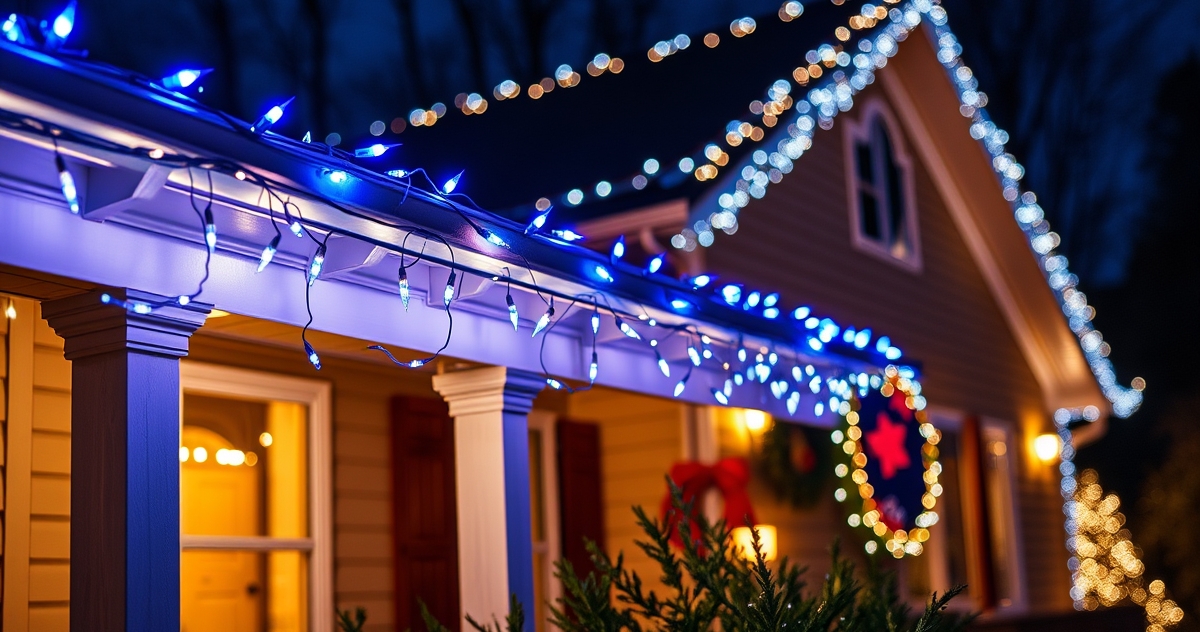
A C9 bulb is a candelabra-style lamp with a cone-shaped (C-shaped) globe approximately 1.5 inches in diameter, seated on an E17 intermediate base and typically drawing between 5 watts (LED) and 7 watts (incandescent) per socket. That size matters enormously outdoors: it produces a bold, unambiguous point of light that reads clearly at 50, 100, even 150 feet — the viewing distances that define curb appeal on a typical Rhode Island residential street.
C9s mount on a heavy-duty SPT-2 wire (18 AWG, rated for outdoor use) with sockets spaced at standard intervals of 12 or 15 inches. Because bulbs are replaceable individually, a single burned-out lamp never ruins an entire run. That replaceability is a major advantage over shorter mini-light strings, which can cascade into whole-section outages. For anyone serious about a polished, long-lasting display, C9s on commercial-grade wire are the professional's first choice. You can explore how they integrate into a full design plan on our holiday light bulb types guide for Rhode Island.
Spacing Standards for Rhode Island's Three Most Common Roofline Profiles
Proper spacing is the difference between a display that looks intentional and one that looks improvised — and Rhode Island's dominant architectural styles each call for a slightly different approach.
Ranch Homes
Single-story ranches — prevalent across Warwick, Johnston, and North Providence — typically have a low, wide roofline running 40 to 80 linear feet across the front. The standard 12-inch socket spacing works perfectly here, producing a dense, even line of light that hugs the fascia. Because the roofline sits only 10–14 feet off the ground, each bulb is seen at closer range, so consistent spacing is especially visible to passing drivers. For a 60-foot ranch front, plan on a single 72-socket run with two 15-amp circuits to stay well within safe load limits.
Cape Cod Homes
Capes are everywhere in Rhode Island, from Westerly to Cumberland, and their steeply pitched, often asymmetrical rooflines create an interesting design challenge. The steep pitch compresses the visual angle from the street, which means 12-inch spacing can look slightly sparse on the upper rake edges. Many installers — including our team — switch to 9-inch spacing on rake lines and keep 12-inch spacing on horizontal eaves. This creates visual density where the eye needs it most without overloading circuits. Always measure both eave runs and all rake edges separately; a typical cape can require 120–150 feet of wire once both stories are accounted for. Our site measurement and scheduling guide walks through exactly how to capture those numbers accurately.
Colonial Homes
Two-story colonials — the dominant style in neighborhoods across East Greenwich, Barrington, and the East Side of Providence — present both the greatest visual impact potential and the greatest installation complexity. Roofline heights of 22–28 feet mean viewers see the display from farther away, so 12-inch spacing reads perfectly. However, multi-story work requires proper laddering technique, safety anchoring, and often an articulating ladder for the peaks. The payoff is enormous: a well-lit colonial with 150–200 C9s tracing the full roofline, garage peaks, and front entry columns is genuinely showstopping. See our post on multi-story holiday light installation planning in Rhode Island for safety and logistics details.
| Home Style | Typical Roofline Length | Recommended Spacing | Estimated Bulb Count (Front Only) |
|---|---|---|---|
| Ranch | 40–80 ft | 12 in | 40–80 bulbs |
| Cape Cod | 80–140 ft (eaves + rakes) | 9 in (rakes) / 12 in (eaves) | 90–160 bulbs |
| Colonial | 120–200 ft (full roofline) | 12 in | 120–200 bulbs |
LED vs. Incandescent C9s in New England Coastal Conditions
Rhode Island's coastal climate is genuinely demanding on holiday lighting. Salt air from Narragansett Bay and the Atlantic accelerates corrosion on metal contacts, winter humidity regularly tops 80%, and nor'easters can send sustained winds of 40–60 mph howling across exposed rooflines for hours at a time. Understanding how LED and incandescent C9s respond to these conditions is essential before you commit to a product.
LED C9 Advantages in Rhode Island
- Moisture resistance: Quality LED C9s use fully encapsulated diodes with no filament to oxidize. Salt-air exposure that corrodes incandescent contacts within one or two seasons has little effect on a well-sealed LED globe.
- Wind survivability: LEDs run cool — surface temperatures stay under 100°F versus 170°F+ for incandescents — which means they are less susceptible to thermal shock when cold rain or sleet hits a hot bulb during a coastal storm.
- Energy use: A typical LED C9 draws 0.5–1 watt per bulb versus 5–7 watts for incandescent. Running 150 LED C9s for six hours nightly through a six-week season costs roughly $5–$8 in electricity; the same incandescent display runs $50–$70.
- Longevity: LED C9s are rated at 25,000–50,000 hours. Even running six hours nightly for three months a year, that translates to 45+ seasons of use.
When Incandescent C9s Still Make Sense
Incandescent C9s produce a warmer, slightly flickering glow that some homeowners find irreplaceable for a traditional aesthetic. They also cost less upfront — important if you are outfitting a very large display for a single season. However, for anyone planning to reuse their display year after year in Rhode Island's coastal environment, the maintenance savings and failure-rate advantages of LED C9s almost always outweigh the higher initial price within two seasons. Our detailed look at coastal weather and holiday light installation in Rhode Island covers these tradeoffs in greater depth.
Color Temperature Options and How They Interact with Rhode Island Exteriors
Color choice is where C9 displays become genuinely personal — and where understanding your home's exterior finish pays real dividends. Rhode Island homes span a wide architectural and material palette, and the right C9 color makes the building itself look better, not just the lights.
Warm White (2700K–3000K)
Warm white C9s cast a golden, amber-tinged glow that is universally flattering on New England white clapboard siding — the dominant exterior finish from Woonsocket to Watch Hill. The warm tone reads as candlelight against painted wood, evoking Federal-era New England without feeling dated. On cream or ivory stucco, warm white is equally stunning. If your home has classic white or off-white siding and you want an elegant, timeless look, warm white C9s are our single most recommended choice. Read more about this color decision in our dedicated post on cool white vs. warm white holiday lights in Rhode Island.
Cool White (5000K–6000K)
Cool white C9s produce a crisp, blue-white light that creates dramatic contrast against red brick — common on Providence's East Side, in Pawtucket mill-era homes, and on many Barrington colonials. The high contrast reads as modern and architectural. Cool white also photographs exceptionally well, which matters for homeowners whose holiday displays are a point of neighborhood pride. On dark-painted homes (navy, charcoal, forest green), cool white C9s appear almost like embedded stars.
Multicolor
Multicolor C9 sets — typically cycling red, green, yellow, orange, and blue bulbs across the run — deliver the classic American holiday look that many Rhode Island families have grown up with. They work on virtually any exterior, but they are especially at home on traditional cape and colonial homes in established residential neighborhoods. Multicolor creates a festive, inclusive energy that single-color displays can lack.
Red and Green
Red-and-green C9 combinations — either alternating bulb by bulb or in color blocks — are a deliberate, graphic design choice. They look spectacular on white clapboard colonials and on commercial storefronts along main streets from Bristol to Westerly. The high chromatic contrast is visible from a significant distance, making this combination especially popular for municipal and commercial applications. You can see how we deployed a similar approach for Independence Day in our patriotic C9 bulb display guide — the same design logic applies directly to red-and-green holiday configurations.
Clip Hardware, Wiring, and Installation Best Practices
C9 wire runs at 120V AC and must be treated with respect. Every installation we perform uses UV-stabilized SPT-2 wire rated for outdoor use, and every run is protected by a GFCI outlet — non-negotiable in Rhode Island's wet winters. Clips matter too: all-weather plastic C-7/C-9 shingle tabs hold the wire flush against the fascia without puncturing or compressing the insulation, and they release cleanly at takedown without damaging gutters or roofing. For deeper hardware guidance, see our post on light clip and hardware selection in Rhode Island. Before any installation, we also recommend a basic roof and gutter check — our gutter and roofline prep guide outlines exactly what to look for.
Planning Your C9 Installation: Timeline and Next Steps
The best time to plan a C9 roofline display is well before the holiday season pressure builds. By August, our design calendar begins to fill with Rhode Island homeowners who know that the most desirable installation windows — mid-November through early December — go quickly. Booking early also allows time for a proper site survey, accurate wire length calculations, and any necessary electrical assessment. Our early bird booking guide explains exactly what the scheduling process looks like and what discounts apply to summer bookings.
Whether you are a homeowner looking for a stunning roofline display on your Cranston ranch, a property manager overseeing a multi-building complex in Providence, or a municipality planning a main street installation in Bristol or Warren, C9 bulbs deliver a level of visual impact that no other residential-scale product matches. Our residential holiday lighting services and commercial holiday lighting services are both built around professional-grade C9 systems installed with the precision and safety Rhode Island homes deserve.
Frequently Asked Questions
How many C9 bulbs do I need for a typical Rhode Island colonial roofline?
A typical two-story Rhode Island colonial with a front roofline of 120–180 linear feet (including the main ridge eave and any garage peaks) requires 120–180 C9 bulbs at standard 12-inch spacing. Homes with decorative gables, dormers, or a covered entry portico may add another 30–60 bulbs. A professional site measurement, like the process we outline in our site measurement guide, gives you an exact count before you purchase or order wire.
Are LED C9 bulbs worth the higher cost for Rhode Island homeowners?
Yes, in almost every case. LED C9s cost $0.50–$1.50 per bulb versus $0.15–$0.40 for incandescent, but they draw 80–90% less electricity, last 25,000–50,000 hours, and resist the salt air and humidity that degrade incandescent contacts within one to two Rhode Island winters. Most homeowners recover the price difference in energy savings within two seasons and enjoy dramatically fewer mid-season failures.
What color C9 bulbs look best on a white clapboard New England home?
Warm white C9s (2700K–3000K) are the most flattering choice for white or off-white clapboard siding, producing a golden glow that enhances the classic New England architectural character of the home. Multicolor C9 sets are the next most popular option for traditional looks. Cool white C9s (5000K–6000K) can work on white clapboard but tend to wash out lighter siding tones; they are better suited to brick, dark paint, or stone exteriors.
Can I leave C9 strings installed through a Rhode Island winter, or should they come down after the holidays?
Professional-grade outdoor C9 wire and LED bulbs can technically withstand Rhode Island winter conditions, but we recommend removal by mid-January for two reasons: UV degradation accumulates on wire insulation during extended outdoor exposure, and early removal prevents ice dam formation in gutter channels where wire tends to collect debris. Our removal and storage service handles takedown and professional packing so your display is protected for next season.
Do I need a permit to install C9 holiday lights on my Rhode Island home?
Temporary seasonal lighting displays on private residential property do not require a building permit in Rhode Island municipalities. However, HOA communities may have display guidelines covering light colors, installation dates, and removal deadlines — our HOA approval guide covers how to navigate those rules. Commercial and municipal installations may require electrical permits; our team manages all permit coordination for those projects.
How far in advance should I book a C9 installation in Rhode Island?
For a November installation — the most popular window — we recommend booking by late August or early September at the latest. Mid-October through early November appointments fill first across Providence, Newport County, and South County. Summer bookings often qualify for early-bird pricing and guarantee your preferred installation date. Visit our contact page to request a free estimate and check current availability.