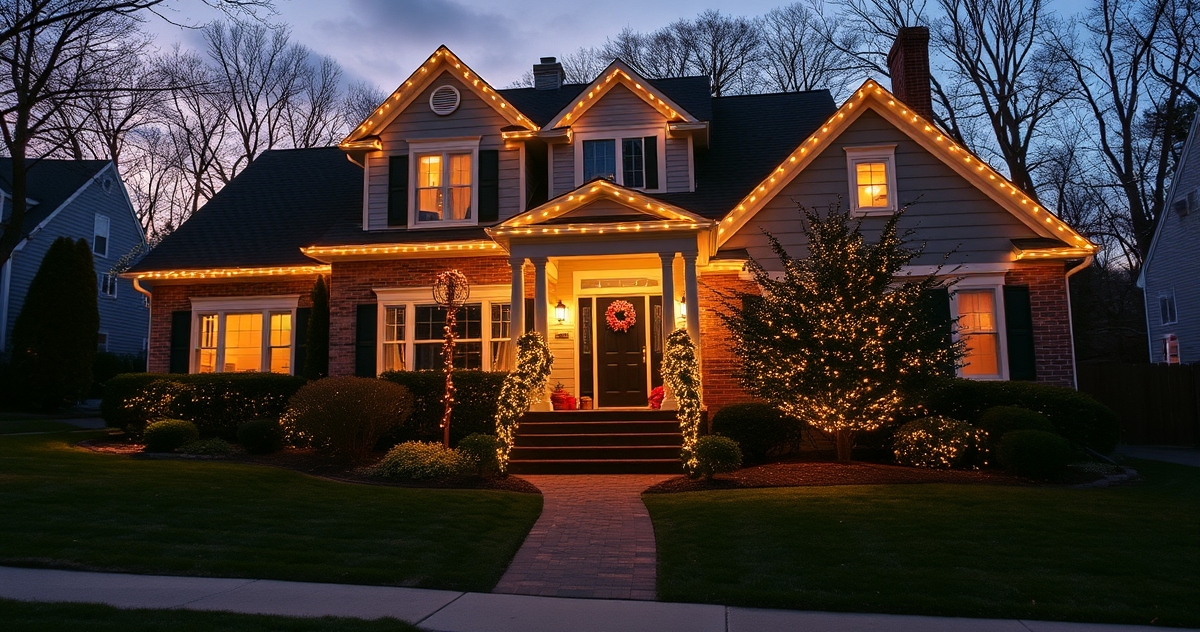
Picture the maple in your front yard six months from now — every limb traced in warm white mini LED string lights, the trunk wrapped tight from the base to the first fork, the whole tree glowing like a beacon against a cold Rhode Island December night. That kind of result doesn't happen by accident, and it certainly doesn't happen when you call an installer the week after Thanksgiving. It happens because someone took thirty minutes in June to measure, plan, and book.
Tree wrapping is one of the most labor-intensive and material-intensive parts of any holiday lighting display. It's also the element that separates a good display from a jaw-dropping one. And the homeowners who get it right almost always start their planning in the slow summer months, long before the fall rush hits.
Why June Is the Smartest Month to Plan Tree Wrapping
Tree wrapping eats more linear footage of lights than any other part of a typical residential display. A single mature oak can swallow 800 to 1,200 feet of mini LED string lights once you account for the trunk and every major branch. Multiply that across two or three trees and you're talking about thousands of feet of product that has to be ordered, counted, and staged before installation day.
When you wait until November to make these decisions, you're competing with every other homeowner in the state for both product and installer time. Supply runs thin. Premium colors sell out. Crews get booked solid. June solves all of that. The summer slow season gives us time to measure carefully, source the exact footage you need, and lock you into a scheduling slot before the calendar fills.
This is the same logic behind summer planning advantages for Christmas lights in Rhode Island — early decisions translate into better results and fewer surprises.
Measuring Trunk and Branch Dimensions for Accurate Footage
The single biggest reason tree wrapping goes wrong is bad footage estimates. Eyeballing a tree from the driveway never works. To wrap a trunk or branch properly, you need to know its circumference and length, then apply a spacing factor based on how tight you want the wrap.
Here's the basic math our crews use during a June site survey:
- Trunk circumference — measured at the base and again at chest height, since most trunks taper.
- Wrap spacing — a tight 2-inch spacing creates a dense, glowing column; a 4-inch spacing is more economical but less dramatic.
- Branch reach — how far up each major limb you plan to wrap, which dramatically changes the total footage.
A tight wrap on a 6-foot section of trunk that's 36 inches around can require well over 100 feet of mini LED string lights on its own. Get these numbers in June and we never face a last-minute shortage when the installation crews arrive in the fall. Guess at them in November and you risk a half-finished tree on install day.
Why Warm White Wins on Wrapped Trees
Color choice matters more on trees than almost anywhere else in the display. Warm white wrap lights give bare winter branches a soft, golden, almost candlelit glow that reads as elegant and timeless — perfect for the classic colonial and Victorian homes throughout Rhode Island. Cool white, by contrast, produces a crisp, icy effect that pairs beautifully with modern architecture and snowy backdrops.
Many of our residential clients run warm white on their wrapped trees while reserving cool white for sharper architectural accents. If you're torn between the two, our color design consultation walks you through how each tone behaves once the sun goes down.
Knowing Which Trees to Wrap and Which to Light from Above
Not every tree should be wrapped. One of the most valuable things we determine during a summer consultation is which trees suit trunk-and-branch wrapping versus which are better served by canopy or up-lighting. Getting this wrong leads to displays that look busy in some spots and bare in others.
As a general guide:
- Best for wrapping: Trees with strong, accessible trunks and well-defined major branches — maples, oaks, and ornamental species like Japanese maples or crepe myrtles. The structure holds the lights and shows them off.
- Best for canopy or up-lighting: Tall evergreens, dense pines, and very large mature trees where wrapping every limb is impractical. These look stunning washed in light from below or netted across the canopy.
- Best left simple: Young saplings or fragile ornamentals that can't support heavy wrapping.
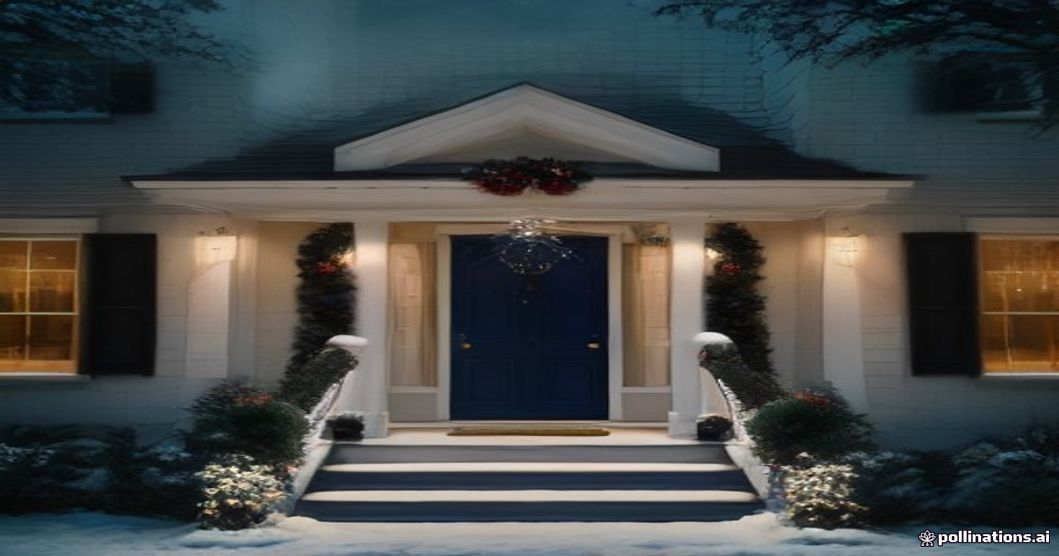
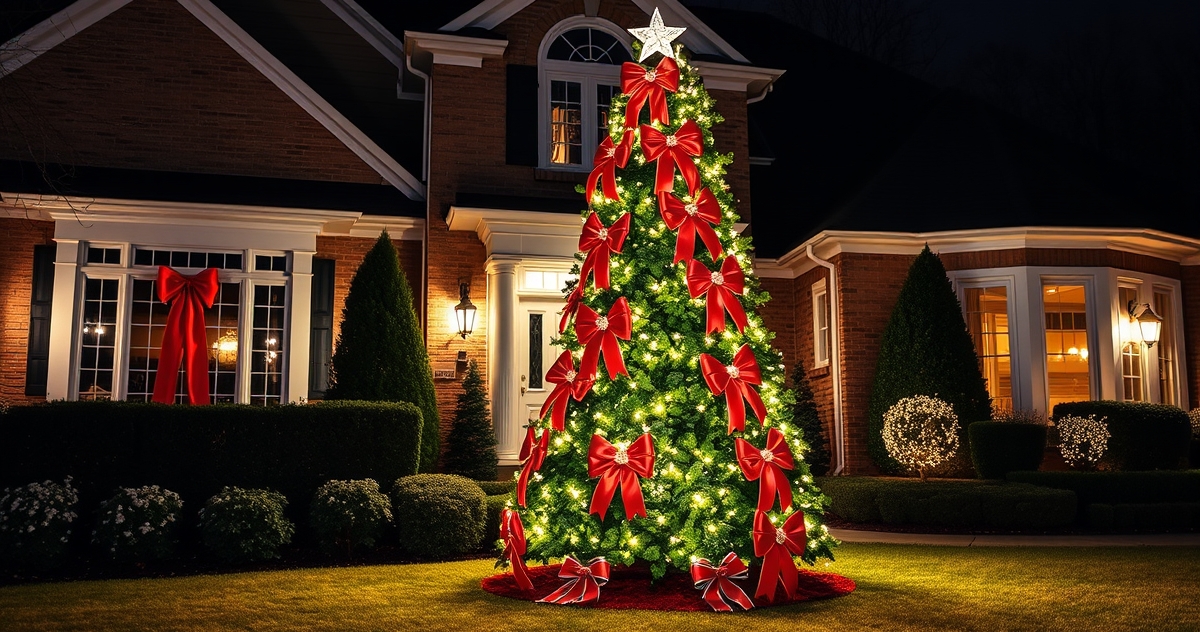
Identifying these categories in June lets us design a layered display — wrapped trunks in the foreground, glowing canopies in the back, garlands and warm white C9 bulbs framing the roofline, and Wreaths and Bows finishing the front door. That depth is what makes a display look professionally designed rather than thrown together. Explore our gallery to see how these layers come together on real Rhode Island homes.
Layering Trees Into the Full Display Design
Wrapped trees rarely stand alone. They're one instrument in a larger composition. When we plan a residential lighting design, we think about how the trees relate to everything else: the warm white C9s on the roofline, the mini lights tucked into the boxwoods, the pre-lit Garlands wrapping the porch railing, and the oversized Wreath on the front door tied off with a rich red velvet Bow.
A wrapped maple glowing warm white pulls the eye into the yard. A canopy-lit evergreen creates a backdrop. A pair of cool white accent trees flanking the driveway frames the approach. Plan all of this together in June and the result feels intentional and cohesive. Plan it piecemeal in November and you end up with mismatched spacing, clashing color temperatures, and gaps in the design.
Booking in the Slow Season Locks In Better Scheduling and Pricing
Here's the practical payoff. The fall and early winter are an all-out sprint for every reputable lighting company in Rhode Island. By October, the best installation slots are spoken for, and by November we're often turning away new projects entirely.
Booking your tree wrapping consultation in June changes the equation in your favor:
- Better scheduling — you choose your preferred installation window instead of taking whatever's left.
- Locked-in pricing — reserving early protects you from peak-season demand pressure.
- Material certainty — your exact footage of mini LED string lights and warm white wrap lights is sourced and set aside.
- Time to refine — months to tweak the design rather than rushing a last-minute plan.
This is the same advantage we cover in our piece on early booking for Christmas light installation — the homeowners who plan ahead simply get a better experience and a better display.
Tree wrapping rewards patience and precision more than almost any other part of holiday lighting. The measurements taken in June, the trees identified for wrapping, and the slot locked into our summer calendar are what produce that flawless glowing maple you'll be proud of in December. Our team handles every step — measuring, sourcing, designing, and installing — so the result looks effortless even though it took real planning.
Ready to get those summer measurements on the books? Contact us or request a free quote and learn more about our full range of holiday lighting services across Rhode Island. Call (401) 271-1881 to schedule your June consultation.
Frequently Asked Questions
How much light footage does it take to wrap a tree?
It depends entirely on trunk circumference, how far up the branches you wrap, and your spacing. A single mature tree can require anywhere from 300 to over 1,000 feet of mini LED string lights. Measuring in June lets us calculate the exact footage so you never run short on installation day.
Should I choose warm white or cool white for wrapped trees?
Warm white gives bare winter branches a soft, golden, elegant glow that suits classic Rhode Island colonials and Victorians. Cool white creates a crisp, icy effect ideal for modern homes and snowy settings. Many clients pair warm white on trees with cool white architectural accents.
Which trees are best for wrapping versus up-lighting?
Trees with strong, accessible trunks and clear major branches — like maples, oaks, and ornamentals — wrap beautifully. Tall evergreens and very large dense trees usually look better with canopy or up-lighting. We identify the right approach for each tree during a summer consultation.
Why book tree wrapping in June instead of the fall?
The fall is peak season, when scheduling slots and premium products run thin. Booking in June secures your preferred installation window, locks in pricing before the rush, and guarantees your exact light footage is sourced ahead of time.
Can wrapped trees be combined with other lighting?
Absolutely — that's how the best displays are built. We layer wrapped trees with roofline C9 bulbs, mini lights in shrubs, pre-lit garlands, wreaths, and bows to create a cohesive, professionally designed look with real depth.